Read the guide below for the main considerations, practical tips and useful next steps.
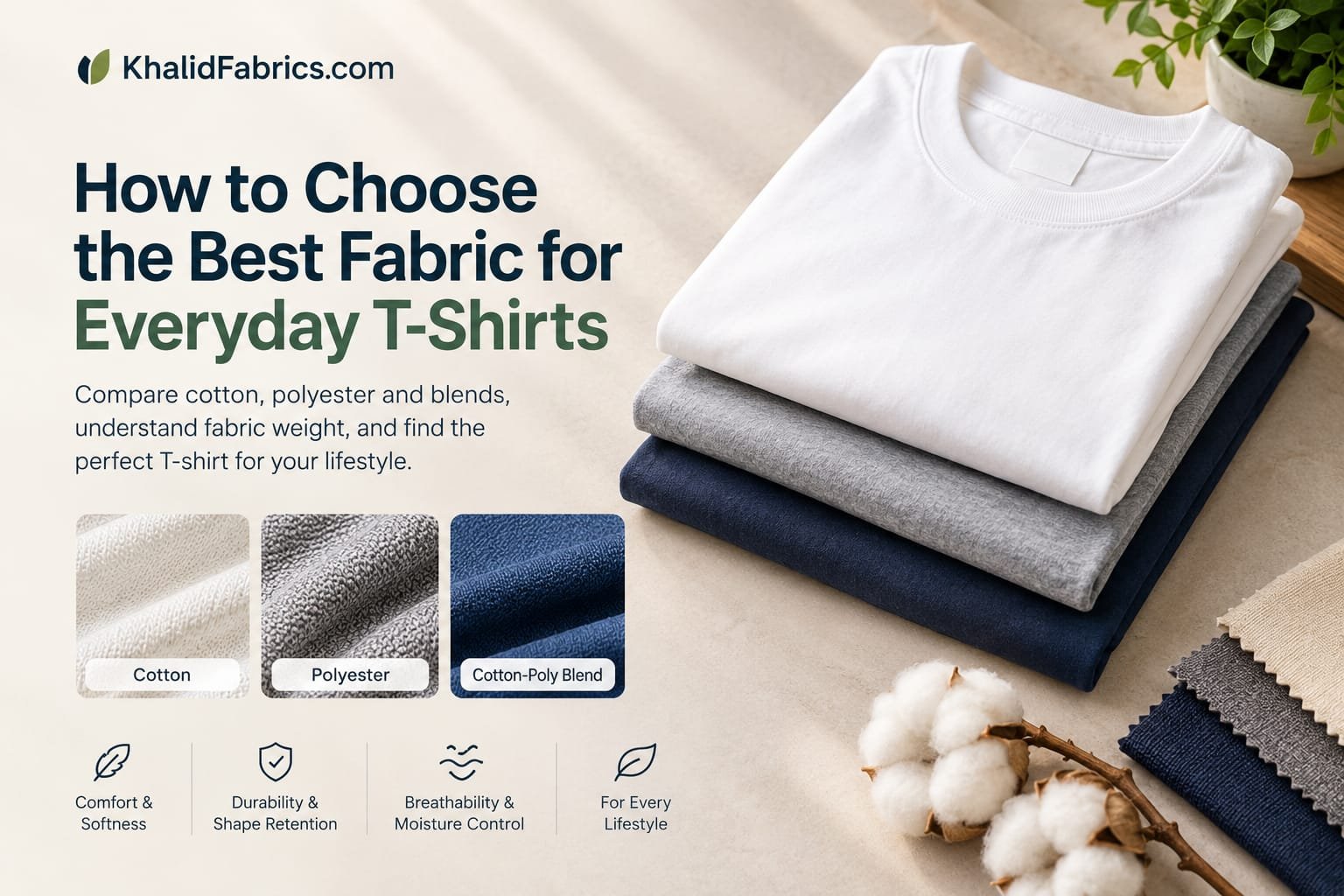
How to Choose the Best Fabric for Everyday T-Shirts: A Complete Buying GuideThe perfect everyday T-shirt is one you reach for again and again. It feels comfortable against your skin, works with your daily routine, holds its shape after washing, and looks just as good with jeans as it does under a jacket.But finding that T-shirt isn't always as simple as choosing the right color or size. The fabric makes a real difference. It can influence how breathable a shirt feels, how quickly it dries, how well it keeps its shape, and how much care it needs over time.For many people, cotton is a natural starting point for everyday wear. Polyester can be a practical choice for workouts and quick-drying needs, while cotton-polyester blends offer another option for people who want a balance of comfort and easy care.Still, no single fabric is perfect for everyone.Whether you're shopping for summer basics in the United States, building a versatile wardrobe in Europe, or simply looking for a T-shirt that lasts beyond a few washes, understanding the differences between common fabrics can help you make a smarter choice.In this guide, we'll compare cotton, polyester, and cotton-polyester blends, explain what fabric weight means, and share practical tips for choosing a T-shirt that fits your lifestyle.Key Takeaways100% cotton: A strong choice for everyday casual wear if you prefer a familiar, natural-fiber feel.Polyester: Worth considering for workouts, sports, and situations where quick drying matters.Cotton-polyester blends: A practical option when you want a balance of comfort, shape retention, and easy care.Fabric weight matters: Lightweight, midweight, and heavyweight T-shirts can feel very different, even when they use the same fiber.Construction matters just as much: Stitching, knit quality, fit, and finishing can affect how a T-shirt performs over time.Check the care label: A good everyday shirt should fit not only your wardrobe but also your laundry routine.Why Does Fabric Matter in an Everyday T-Shirt?A T-shirt may look like one of the simplest items in your wardrobe, but its fabric affects how it feels throughout the day.A shirt that works perfectly for a relaxed weekend might feel too heavy during a hot summer commute. A lightweight option may be comfortable in warm weather but offer less coverage than you want. And a shirt that looks great in the store may become less appealing if it shrinks, twists at the seams, or loses its shape after repeated washing.Before choosing a fabric, think about how you actually wear your T-shirts.Do you wear them to work, while travelling, at the gym, or mostly at home? Do you prefer a soft, relaxed fit or a more structured look? Do you live somewhere warm and humid, or do you need a dependable base layer for cooler weather?These details can matter more than choosing a fiber simply because it is popular.Fiber vs. Fabric: What's the Difference?It's also helpful to understand that fiber content is only one part of a T-shirt's quality.Cotton and polyester describe the fibers used to make the material. Jersey, on the other hand, is a knitted fabric structure commonly used for T-shirts.That distinction explains why two shirts labelled “100% cotton” can feel completely different. One may be smooth, lightweight, and flexible, while another feels thick, textured, and more structured.Yarn quality, knitting, fabric weight, finishing, garment construction, and fit all contribute to the final result.In other words, don't judge a T-shirt by its fiber label alone.What Does Consumer Research Tell Us About Fabric Preferences?Consumer surveys offer useful context for understanding why cotton remains popular in everyday clothing. However, survey findings should be interpreted carefully, particularly when they cover several types of products or are published by organizations associated with a particular fiber.The 2025 Global Lifestyle Monitor survey, released by Cotton Incorporated and COTTON USA, interviewed 13,026 consumers across 13 countries. Its published findings reported that 75% of respondents preferred clothing made from cotton, cotton blends, or denim. The survey also reported positive consumer perceptions of cotton clothing for comfort, softness, and quality.There is an important distinction here: this finding does not mean that 75% of consumers specifically prefer 100% cotton T-shirts. The reported category includes cotton blends and denim, and the survey was released by organizations associated with the cotton industry.The broader textile market also includes substantial use of synthetic fibers. Textile Exchange's Materials Market Report 2026 estimated that global fiber production reached 139 million tonnes in 2025, with polyester accounting for approximately 59% and cotton approximately 18% of total fiber production.These figures describe global fiber production—not T-shirt sales or consumer preferences. They help illustrate the scale of different materials in the textile industry, but they do not establish which fabric is best for an individual shopper.The practical takeaway: Cotton deserves consideration for everyday comfort, polyester has useful performance applications, and blends can offer a sensible compromise. The right choice depends on the garment itself and how you intend to wear it.1. 100% Cotton T-Shirts: A Reliable Choice for Everyday WearCotton is a natural fiber widely used in casual clothing. A well-made cotton T-shirt can feel soft, comfortable, and familiar against the skin, which makes it a popular option for basic wardrobe essentials.From classic crew-neck tees to graphic T-shirts and relaxed weekend styles, cotton jersey is available in a wide range of textures, weights, and price points.Why Choose Cotton?Comfort and feel: Many people appreciate the familiar feel of cotton against the skin. The actual softness, however, depends on yarn quality, knitting, finishing, and the garment's construction.Everyday versatility: Cotton T-shirts work well with jeans, chinos, shorts, skirts, and casual layers. A simple cotton tee can fit into a wide range of personal styles.Moisture absorption: Cotton absorbs moisture, which may feel comfortable in many everyday situations. However, absorbing moisture is not the same as drying quickly. A thick cotton shirt can become heavy when damp.A wide range of options: Cotton T-shirts come in lightweight, midweight, and heavyweight constructions, making it easier to find a shirt for different seasons and styling preferences.What Should You Watch Out For?Cotton isn't automatically the best option in every situation.Depending on its construction and care, a cotton T-shirt may shrink, wrinkle, twist at the seams, or gradually lose its shape. High drying temperatures can contribute to shrinkage in some garments.Pre-shrunk cotton may help reduce unexpected changes in size, but it doesn't guarantee that a shirt will never shrink.It's also worth remembering that “100% cotton” is a fiber-content description, not a quality guarantee. A poorly constructed cotton T-shirt may perform less well than a carefully made blend.Before buying, check the fabric's feel, neckline, stitching, fit, and care instructions.Best for: Everyday casual wear, wardrobe basics, relaxed outfits, and shoppers who prefer the feel of natural fibers.2. Polyester T-Shirts: A Practical Option for Active DaysPolyester is a synthetic fiber widely used in sportswear, performance clothing, and everyday apparel. It absorbs relatively little moisture compared with cotton and can dry quickly, depending on the fabric's construction.This makes polyester worth considering when your routine involves exercise, outdoor activities, or frequent travel.Why Choose Polyester?Quick-drying potential: Polyester is often useful when you need a shirt that dries relatively quickly after sweating or washing.Performance features: Polyester fabrics can be engineered for moisture management, ventilation, stretch, and lightweight comfort. These features depend on the specific fabric design rather than the fiber name alone.Shape retention: Some polyester garments resist certain types of wrinkling and maintain their shape well, which can make them convenient for regular use.Useful for exercise: A well-designed polyester T-shirt can be a good choice for running, gym sessions, hiking, and other activities where drying time and moisture management matter.What Are the Potential Downsides?Polyester performance varies considerably.Some shirts may feel smooth or slightly slick against the skin, while others feel softer and more fabric-like. Breathability also depends on the knit structure, fabric density, ventilation, and fit.Odour can be another consideration. Some polyester sportswear retains noticeable smells after repeated wear, although results vary with the garment, washing routine, and any treatments applied to the fabric.There is also an environmental trade-off. Conventional polyester is generally made from fossil-based raw materials. Recycled polyester is available, but using recycled content does not eliminate every environmental impact associated with producing, washing, and disposing of clothing.Textile Exchange's 2025 reporting found that most recycled polyester fiber came from plastic bottles rather than discarded textiles. This highlights the continuing challenge of recycling used textiles back into new textile fibers.Best for: Workouts, sports, outdoor activities, travel, and situations where quick drying or performance features are important.3. Cotton-Polyester Blends: A Balance of Comfort and ConvenienceIf you like the feel of cotton but want a T-shirt that may be easier to maintain, a cotton-polyester blend is worth considering.These fabrics combine two fibers, but the final result depends on the blend ratio, yarns, knitting, and finishing process.For example, a label reading 60% cotton and 40% polyester tells you the proportions of the fibers by weight. It doesn't guarantee a particular level of softness, breathability, durability, or shrink resistance.Why Consider a Blend?A cotton-rich blend may retain some of cotton's familiar feel while benefiting from polyester's properties.Depending on construction, a blend may:Offer a practical balance of comfort and easy care.Resist some wrinkles better than a comparable all-cotton garment.Maintain its shape well during regular wear.Work for everyday outfits, commuting, and travel.Suit people who want versatile basics without choosing a fully synthetic fabric.These are potential advantages, not guarantees. The performance of one blend can differ significantly from another.Are Blended Fabrics Always Better?Not necessarily.A poorly made blend can still feel uncomfortable, develop pilling, or lose its shape. Likewise, a high-quality cotton T-shirt can be comfortable and long-lasting when properly constructed and cared for.Rather than choosing a blend simply because it contains polyester, look at the overall garment. Check the product description, fabric weight, fit, stitching, and washing instructions.Best for: Everyday use, travel, casual wardrobes, and shoppers looking for a practical balance of comfort and maintenance.Cotton vs. Polyester vs. Cotton-Polyester BlendsThe following comparison is a general guide. Actual performance depends on the fabric's construction, weight, finishing, fit, and care.Feature100% CottonPolyesterCotton-Polyester BlendTypical feelFamiliar natural-fiber feelVaries from smooth to technicalDepends on the blend and constructionMoisture behaviourAbsorbs moistureUsually absorbs less moistureDepends on fiber proportions and constructionDrying timeCan take longer when wetOften dries quicklyVaries by blend and fabric designWrinkle resistanceCan wrinkleOften resists wrinklesMay offer a practical compromiseCommon usesCasual wear and basicsSportswear and performance clothingEveryday basics and versatile teesPotential drawbackMay shrink or wrinkleMay retain odour for some wearersQuality varies widelyThe bottom line: There is no universal winner. Choose cotton for its familiar feel, consider polyester for performance needs, and compare blends when convenience and versatility are priorities.4. What Fabric Weight Is Best for Everyday T-Shirts?Fabric weight is commonly measured in GSM, or grams per square metre. It describes how much a given area of fabric weighs.A higher GSM generally indicates a heavier fabric, but it doesn't automatically mean the T-shirt is softer, stronger, more breathable, or better made.Lightweight T-ShirtsLightweight T-shirts can be useful in warm weather and work well as base layers under shirts, knitwear, or jackets.Advantages:Often feel less bulky.Can be comfortable for layering.May drape more loosely around the body.Things to consider:Very thin fabrics may offer less coverage.Light colours can be more transparent.Some lightweight shirts may feel less structured.If you're buying a white or light-coloured T-shirt, check its opacity as well as its weight.Midweight T-ShirtsFor many shoppers, a midweight T-shirt is a useful starting point for everyday wear.It can offer a balance of coverage, drape, and structure without feeling as substantial as a heavyweight tee. This makes it a versatile option for casual outfits, travel, and layering.However, there is no single GSM value that is ideal for everyone. Fabric composition and construction still matter.Heavyweight T-ShirtsHeavyweight T-shirts often have a more structured feel and work well with relaxed, boxy, or streetwear-inspired outfits.They can provide more coverage and hold their shape visually, depending on the construction.On the other hand, they may feel warmer or bulkier, particularly in hot or humid conditions.Choose heavyweight fabric for structure and coverage—not simply because heavier sounds higher quality.5. How to Choose the Right T-Shirt for Your Climate and LifestyleThe best fabric is the one that works in your actual routine. Here's how to narrow down your options.For Hot or Humid WeatherWhen temperatures rise, look for a comfortable fit and a fabric that doesn't feel excessively dense.A lightweight or moderate-weight cotton T-shirt may suit people who prefer an absorbent natural-fiber feel. A well-designed performance polyester shirt may be useful if you sweat heavily or need faster drying.Neither fiber guarantees comfort in every climate. Humidity, ventilation, activity level, and fabric construction all influence how a shirt feels.For Cooler Weather and LayeringA midweight cotton T-shirt or a suitable blend can work well beneath sweatshirts, knitwear, overshirts, and jackets.Think about the fit, too. A slimmer tee may sit more neatly under fitted clothing, while a relaxed cut may work better with casual outerwear.For Work, Travel, and Everyday ErrandsIf you want a shirt that can handle repeated wear and fit into different outfits, consider a well-made cotton T-shirt or cotton-rich blend.Look for a comfortable neckline, reliable stitching, and care instructions that suit your routine. If you're travelling, a fabric that wrinkles less may also be convenient.For Gym Sessions and Outdoor ActivitiesConsider polyester or a performance-oriented blend if quick drying and moisture management are important.Look for product details about ventilation, stretch, and the activity the garment is designed for. A basic polyester tee isn't necessarily equivalent to a technical running or training shirt.For a Minimalist WardrobeIf you prefer owning fewer clothes and getting more use from each item, versatility is key.A practical starting point is to choose:A neutral-coloured everyday T-shirt that works with several outfits.A comfortable fabric weight suited to your climate.A fit that feels good both on its own and under another layer.Care instructions you can realistically follow.The goal isn't to find one magical fabric. It's to choose dependable pieces that fit your life.6. How to Check T-Shirt Quality Before BuyingA product description can tell you a lot, but a few additional checks can help you make a more confident decision.1. Read the Fiber LabelStart by checking the stated fiber composition.In the United States, covered textile products are generally subject to applicable Federal Trade Commission requirements concerning fiber content, country of origin, and the responsible manufacturer or marketer. Care labelling requirements also apply to covered apparel.In the European Union, textile products covered by Regulation (EU) No 1007/2011 must provide fiber-composition information in accordance with the applicable rules.When shopping online, check the product's materials section rather than relying solely on phrases such as “premium cotton,” “performance fabric,” or “eco-friendly.”2. Inspect the Collar and SeamsThe neckline and seams are useful places to start when assessing construction.Look for:A collar that lies flat and feels secure.Neat, consistent stitching.Side seams that appear aligned.No obvious loose threads or uneven finishing.These checks cannot guarantee how a shirt will perform over several years, but they can help you identify visible construction issues.3. Check the Fabric's Feel and OpacityIf possible, handle the fabric before buying.Does it feel comfortable to you? Is it too stiff, rough, thin, or heavy for the way you plan to wear it?If you're buying a light-coloured shirt, consider whether the fabric provides enough coverage. For online shopping, look for close-up images, detailed fabric descriptions, and a clear return policy.4. Choose the Right FitEven a well-made fabric can feel uncomfortable if the cut doesn't suit you.Check the shoulder seams, sleeve length, body width, and overall shirt length. If you prefer a relaxed fit, make sure the garment provides enough room without feeling excessively bulky.A useful tip: Compare the seller's size chart with a T-shirt you already own and like. Measuring a garment that fits you well can be more reliable than guessing from a size label alone.5. Check the Care InstructionsAn everyday T-shirt should be practical to maintain.Read the washing and drying instructions before buying. If you prefer machine washing and regular tumble drying, make sure the garment's care requirements fit your routine.Don't assume every cotton shirt can tolerate high temperatures, and don't assume every synthetic shirt requires the same washing method.7. How to Make Your Everyday T-Shirts Last LongerChoosing a suitable fabric is only half the equation. How you wash, dry, and store your T-shirts can also affect their appearance over time.Follow these practical habits:Follow the care label: Use the washing temperature and drying method recommended for the garment.Turn printed shirts inside out: This can help reduce friction on the printed surface during washing.Avoid unnecessary heat: High dryer temperatures may contribute to shrinkage or damage in some garments.Separate colours when needed: This helps reduce the risk of colour transfer.Treat stains promptly: Use a cleaning method suitable for the fabric and the type of stain.Avoid overloading the washing machine: Clothes need enough room to move through the wash.Air-dry when appropriate: Air-drying can reduce exposure to dryer heat, provided it suits the garment's care instructions.If a T-shirt repeatedly shrinks, twists, or develops holes, the cause may involve fabric quality, construction, washing conditions, or a combination of factors. Fiber type alone rarely explains every problem.With the right care, you can help your T-shirts stay wearable for longer and get more value from the clothes you already own.8. Is Organic Cotton Better for Everyday T-Shirts?Organic cotton may appeal to shoppers who want cotton produced under a recognised organic agricultural standard.However, the word “organic” alone doesn't tell you how soft, durable, or long-lasting a finished T-shirt will be. Those qualities also depend on yarn quality, knitting, garment construction, dyeing, finishing, and care.If environmental considerations influence your buying decisions, look for specific, verifiable information about the standard or certification behind a product's claims.It's also worth avoiding blanket assumptions about sustainability. The overall impact of clothing can depend on raw-material production, manufacturing processes, garment lifespan, washing, and end-of-life handling.A more useful approach is to look for evidence behind a product's environmental claims rather than assuming that one fiber is automatically the best choice in every situation.Frequently Asked QuestionsWhat is the best fabric for everyday T-shirts?For many people, a well-made cotton T-shirt is a good starting point for casual everyday wear. Cotton-polyester blends may be useful when easy care is a priority, while polyester can work well for workouts and quick-drying needs. Your comfort preferences, climate, and intended use should guide the final choice.Is 100% cotton better than a cotton-polyester blend?Not in every situation. Cotton may appeal to people who prefer its natural-fiber feel, while a blend may offer practical benefits such as wrinkle resistance or shape retention, depending on its construction. Compare the actual garments rather than relying on the label alone.Are polyester T-shirts good for summer?They can be, particularly when designed for ventilation and moisture management. However, a dense or poorly ventilated polyester shirt may feel uncomfortable to some people. Fit, fabric construction, humidity, and activity level all matter.Does a heavier T-shirt mean better quality?No. A heavier fabric may offer more structure and coverage, but weight alone doesn't establish quality. Stitching, yarn quality, knit construction, fit, and performance after washing are also important.What does GSM mean on a T-shirt?GSM stands for grams per square metre. It's a measure of fabric weight that helps you compare lighter and heavier materials. It does not directly measure softness, durability, breathability, or comfort.How can I prevent a cotton T-shirt from shrinking?Check the garment's care label, use the recommended washing temperature, and avoid high dryer heat if the instructions warn against it. Shrinkage varies with fabric construction and finishing, so no method can guarantee zero shrinkage for every cotton T-shirt.Are cotton T-shirts more sustainable than polyester T-shirts?There is no universal answer based on fiber name alone. Environmental impacts depend on raw-material production, manufacturing, durability, washing, and end-of-life handling. Look for specific evidence behind environmental claims instead of assuming one material is always better.Which T-shirt fabric is best for sensitive skin?Comfort is personal, and there is no single fabric that works best for everyone. If you have sensitive skin, consider how the fabric feels against your skin, whether the garment has irritating seams or labels, and whether the care products used to wash it affect your comfort. If you have a persistent skin reaction, seek appropriate medical advice.Final Verdict: Which T-Shirt Fabric Should You Choose?If you're looking for one versatile starting point for casual everyday wear, consider a well-made cotton T-shirt with a comfortable fit and clear care instructions.If you prefer easier maintenance and a practical balance of properties, compare cotton-polyester blends. If your routine includes workouts, outdoor activities, or situations where quick drying matters, explore polyester shirts designed for those needs.Before making your decision, check five things:Fiber content: Understand what the shirt is made from.Fabric weight: Choose a weight that suits your climate and preferred style.Construction: Look for neat stitching and a well-finished neckline.Fit: Make sure the cut works for your body and daily activities.Care requirements: Choose something you're comfortable maintaining.Ultimately, the best everyday T-shirt isn't necessarily the most expensive, the heaviest, or the one made from a particular fiber. It's the one that feels right, works with your routine, and continues to serve you after repeated wear and washing.The next time you're shopping for a T-shirt, look beyond the colour and design. Pay attention to the fabric, the construction, and the care instructions. Those small details can make a meaningful difference to how often you wear the shirt—and how long it stays a favourite.Editorial note: Consumer survey findings and global fiber-production figures provide context, not proof that one fabric is universally superior. Check the original reports and applicable US or EU labelling rules before publishing if you need to verify exact figures or make specific compliance claims.Suggested SEO title: How to Choose the Best Fabric for Everyday T-ShirtsSuggested meta description: Learn how cotton, polyester, and cotton-blend T-shirts compare. Discover fabric weights, buying tips, care advice, and how to choose the right everyday tee.Suggested URL slug: best-fabric-for-everyday-t-shirtsSuggested primary keyword: best fabric for everyday t-shirtsSuggested secondary keywords: cotton vs polyester t-shirts, best cotton for t-shirts, cotton polyester blend t-shirt, t-shirt fabric weight, how to choose a t-shirtSuggested featured image alt text: A selection of everyday T-shirts in cotton, polyester, and blended fabrics, illustrating different textures and fabric weights.